In the modern gambling industry, reminders about Responsible Gambling (RG) have become standard practice. The commitment to player protection is a natural part of how betting companies work in Europe and North America. In these regions, operators implement advanced algorithms to detect unusual patterns, regulators tighten requirements, and website interfaces are filled with self-limitation tools.
However, in Africa, the landscape remains different. This applies not only to operator practices but also to player behavior, as calls for self-control are not always effective. The problem, along with the search for possible solutions, was the focus of a large-scale study conducted by 1xBet.
It revealed that the effectiveness of responsible gambling tools directly depends on users’ level of risk awareness. Without a foundation of player education, protection mechanisms become mere formalities. Control alone is not enough — individuals must understand why they are being asked to limit themselves.
Global betting company 1xBet is deeply immersed in the African regional context, including through its participation in specialized iGaming forums. For example, as part of SiGMA Africa, the brand’s team organized its own booth where managers could communicate with partners and other exhibition guests.
An informal part was also prepared, including daily prize draws (iPad Air M3, AirPods Max) and an interactive Afro-memo game. In such an atmosphere, it is easier to establish honest communication, which is necessary for discussing key issues and finding ways to resolve them.
Tools without understanding
The difference between players in Europe and Africa lies in the motivation for gambling. In Europe, users increasingly seek new thrills, while in Africa, many still view betting as a path to quick wealth.
Operators involved in the study noted that due to this mindset, for a significant share of their audience, limits and bans are just technical hurdles rather than self-protection instruments. Players often do not fully understand the long-term implications of such restrictions.
This approach leads bettors to treat self-control tools as a temporary measure to wait out a losing streak, but not a way to address a developing addiction. Many overlook the fact that the very structure of gambling mathematically limits their winning chances. Restrictions are perceived not as financial safeguards, but as annoying obstacles preventing them from immediately recovering losses.
The urge to bypass these barriers, in turn, leads to riskier betting strategies once limits are lifted, as well as a shift toward alternative companies and the unregulated market sector. For example, in Benin, unlicensed operators account for 25-30% of gambling revenue. Similar challenges are observed in Cameroon, Togo, and several other countries across the continent.
African context
As highlighted earlier, in unstable economies with high unemployment, sports betting or attempts to win at slot machines are often perceived as financial strategies. When gambling is driven by economic necessity, rational arguments for a responsible approach are weakened by the desire to earn quick money. This undermines player protection — study participants rated the issue as critical, assigning it a difficulty level of 7/10.
There is currently a gap between Europe and Africa in how gambling regulation is assessed in terms of player protection. In Europe, about 60% of survey participants rated regulatory effectiveness in their primary market at 7 out of 10 or higher, while in Africa, 68% placed local frameworks between 5 and 8.
This doesn’t imply European companies see their systems as perfect, but in Africa, it has yet to reach that level. At the same time, African operators already use KYC (Know Your Client) procedures slightly more frequently than their European counterparts — 75% versus 74%.
Over the past few years, Africa has strengthened its standards for safe gaming and increased the effectiveness of its oversight of the iGaming industry. Cooperation between regulators and operators, which most often occurs within industry forums, is helping to accelerate this process.
From March 3 to 5, 2026, Grand Arena, GrandWest Casino and Entertainment World hosted SiGMA Africa, the largest regional exhibition attended by all key industry players. The event featured business meetings, industry discussions, networking dinners, charity events, and startup pitches.
There are also structural challenges that complicate the educational process. These include the prevalence of retail betting, which is difficult to track digitally, widespread cash payments or transactions via local mobile operators, and unlicensed market activity. In physical betting shops, it is often impossible to conduct detailed player monitoring or enforce self-restriction measures.
In this environment, real-time advice becomes one of the most effective tools — an in-the-moment form of player education. This isn’t just dry warnings, but timely prompts that encourage users to stop or reconsider their strategy right during a session, before emotions take over. As many as 30% of African operators provide online consultations on how to manage behavior following a large win.
Education vs control
The core issue with strict regulation lacking an educational foundation is that users develop resistance to restrictions. Enforced self-control can trigger aggression or a desire to find alternative solutions.
When outright bans are ineffective, a different approach is required. According to the operators who participated in the survey, player education is the logical next step. Partnership, not oversight, is the key to solving the problem. Teaching the fundamentals of probability, how margins work, and why it’s forbidden to bet money allocated for living expenses — all of this must be implemented across the continent.
A large-scale educational initiative, including experience exchange between countries, will help change bettors’ attitudes toward self-control.
Educational initiatives as response to knowledge gaps
The recognition that traditional RG methods may not yet be effective in Africa should encourage industry leaders to explore new approaches. Projects like 1xBalance and 1xCup, launched by 1xBet in Africa, provide a clear example.
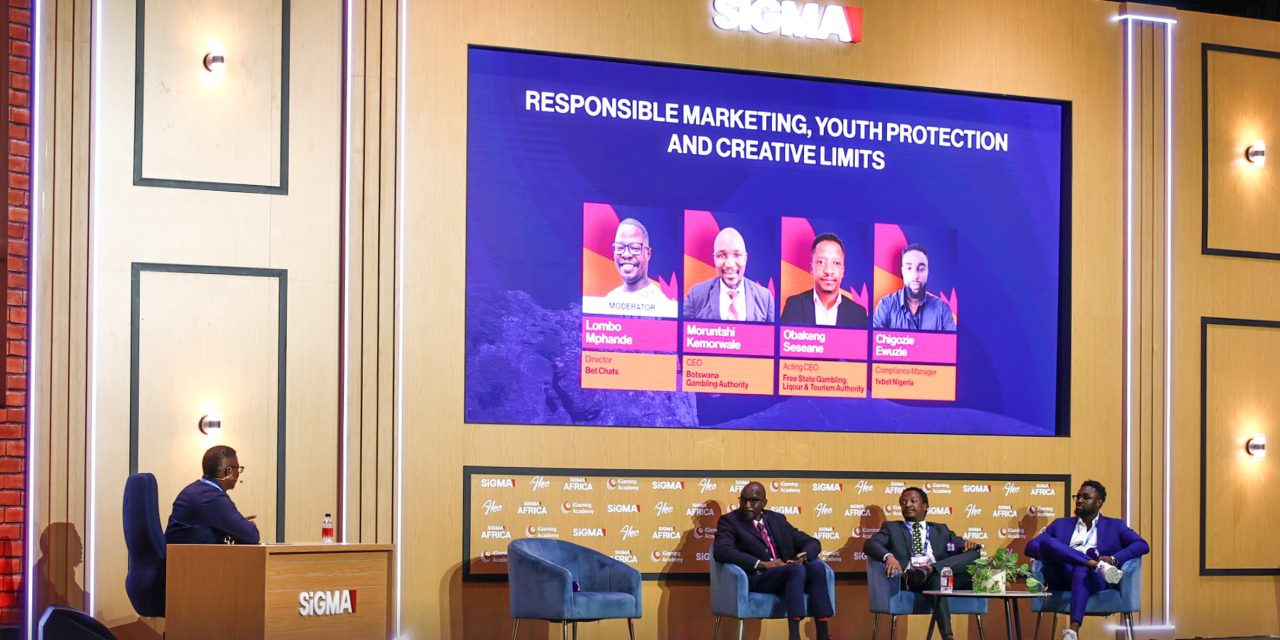
Nanna Chigozie Ewuzie, 1xBet Compliance Manager in Nigeria, during a discussion at the SiGMA Africa 2026 forum, used cases from these projects to demonstrate how engaging young people through sports and interactive programs contributes to the development of a responsible gaming culture.
It is a valuable experience that will help operators and the African iGaming industry as a whole. The region can set a unique example for the market on how to achieve results through education and well-structured communication rather than restrictions and prohibitions.
It’s important to emphasize that these initiatives are a deliberate response to insights gained through market research. Companies like 1xBet operate not only to attract new players but also to help foster a fundamentally new betting culture. Perception of the industry must shift, and this transformation should be as conscious as possible.
The more projects of this kind are introduced across the continent, the faster the approach to gambling will change.
Conclusion
1xBet’s research clearly demonstrates that the industry has reached a stage where the technical sophistication of RG tools alone does not ensure player safety. Responsible gambling must begin with users understanding the mechanics of the activity, and education should serve as the foundation rather than a supplement to protective systems. Without this, limits remain temporary barriers that players seeking a quick profit will simply bypass.
In these conditions, the future of gambling is impossible without a sensible approach from companies and investment in betting culture development. Understanding responsible gambling principles should become the primary safeguard for player protection. Only then will the measures already used by operators become truly effective and strengthen the overall regulatory framework.